Language meets domain
We focus on Korean STT adaptation, service terminology and patterns of speech. The company reports 16,000 hours of development audio; dataset size is distinct from recognition accuracy.
A conversation starts with listening. Short utterances, unfamiliar names and telephone audio all need to become text the next stage can use.
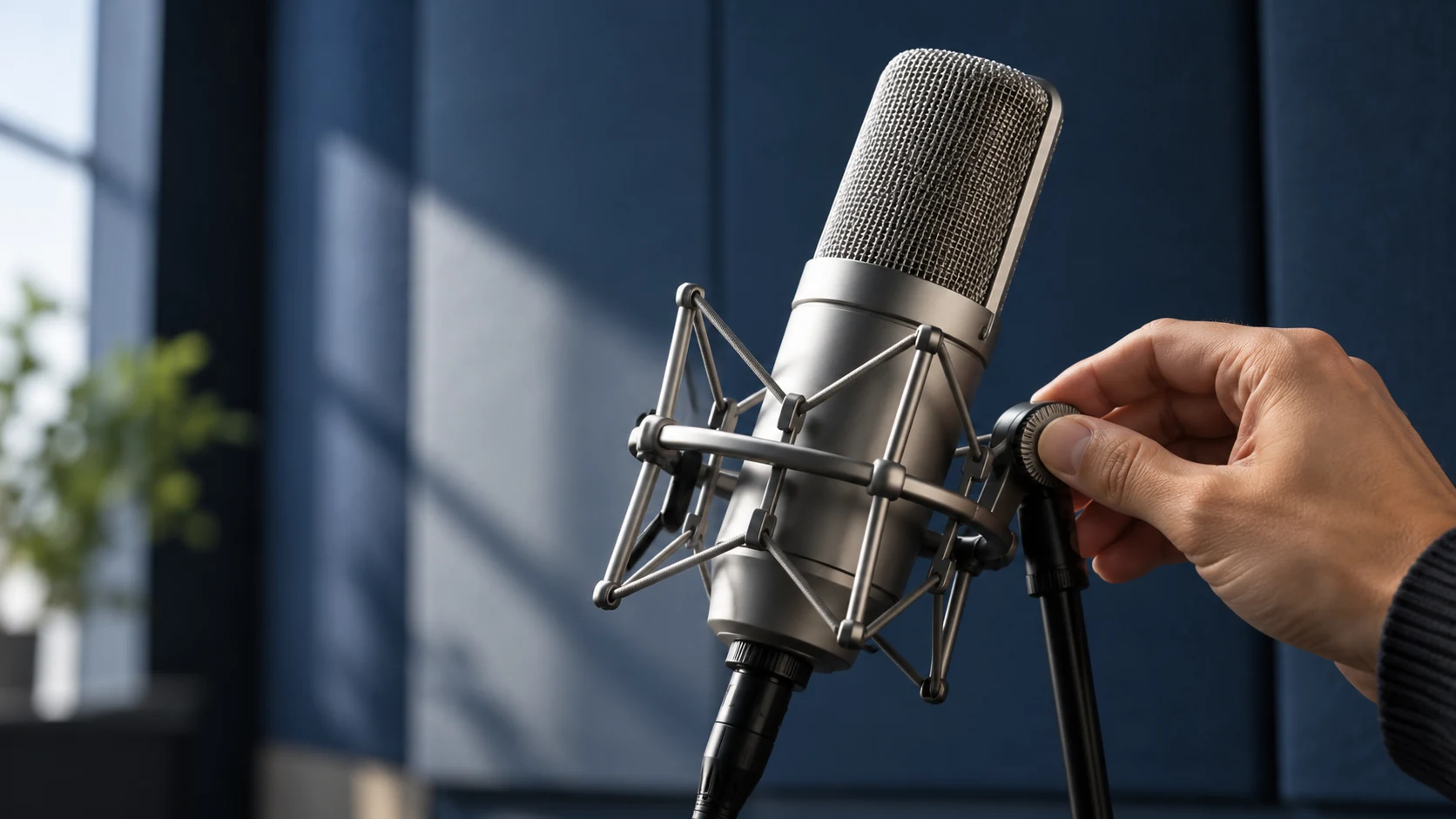
Microphone or telephone audio
Text, timestamps and speaker cues
Domain-adapted recognition, fine-tuned for Korean speech, noisy spaces, older voices and telephone audio.
We focus on Korean STT adaptation, service terminology and patterns of speech. The company reports 16,000 hours of development audio; dataset size is distinct from recognition accuracy.
Process audio in segments, distinguish partial from final transcripts, and tune voice activity detection and endpointing. The goal is to balance responsiveness with a conversation that does not cut people off.
An adapter layer can connect our adapted models or a customer-selected STT engine. Language, hosting requirements and latency determine the choice, verified on the same evaluation audio.
Separate 8 kHz telephone audio from higher-rate microphone input. Build test sets for noise, reverberation, speech rate and older speakers.
Connect web, kiosk and call-centre audio to the conversation orchestrator, with transcripts, timestamps and error events. Integration scope is agreed for each deployment.
The same data, conditions and measurement boundaries. A result starts with a reproducible protocol.
Report Korean CER alongside WER with fixed spacing, punctuation and number-normalization rules. Evaluate names and task-critical entities separately.
Evaluate first partial latency, finalization after speech ends and processing throughput at p50 and p95. State network boundaries and concurrency.
Re-run reference models on identical audio, transcripts and normalization. Published figure is not Korean-specific.
At least 1,000 held-out utterances. Break out noise, older voices and 8 kHz audio; report 95% confidence intervals.
Client audio send to first non-empty interim transcript. Report connection setup separately.
Streaming word error rate · WER ↓ · Deepgram Nova-3 6.84%¹
Korean character error rate · CER ↓ · Whisper large-v3 uses CER for Korean²
First transcript latency ↓ · Matched-condition evaluation planned
Connect retrieval, language models and business systems. The aim is an answer grounded in approved information, with a clear boundary around what the assistant can do.

Transcript, context and approved knowledge
Grounded answers and approved actions
Connecting responses to relevant company documents and verified knowledge.
Design chunking around document structure, metadata, permissions and versioning. Choose keyword retrieval, vector retrieval and reranking around the corpus and the questions.
We distinguish model development from platform development. External LLMs are connected around task, speed and cost, while our platform coordinates retrieval, context and conversation history.
When evidence is insufficient, design for clarification, abstention or handover. Validate tool calls against allowed actions and add confirmation and audit records for consequential operations.
Connect approved FAQs, product information, academic rules and manuals. Define permissions, deletion and freshness policies before integrating retrieval and generation.
Choose data location and model routing for SaaS, dedicated cloud or on-premise requirements. Define observability for conversation outcomes, cost and latency.
The same data, conditions and measurement boundaries. A result starts with a reproducible protocol.
Measure evidence retrieval through Recall@k and ranking quality, then evaluate generated claims through faithfulness and citation precision.
Include unanswerable questions, changed policies and restricted documents. Combine automated evaluation with human-reviewed outcomes.
≥300 human-labelled queries. Fraction of relevant evidence retrieved in the top five.
Share of verifiable claims supported by sources. Automated evaluation plus human review. Do not convert vendor 1–5 scales into percentages.
Check whether each cited passage actually supports the associated claim.
Target protocol: 100k fixed chunks, top-5, 10 concurrent requests. Generation latency is measured separately.
Retrieval recall · Recall@5 ↑ · Azure: NDCG and retrieval evaluation¹
Claim groundedness ↑ · AWS: Faithfulness / Azure: Groundedness
Citation precision ↑ · AWS: Citation precision²
Retrieval latency ↓ · Matched-condition evaluation planned
Design the moment an answer becomes sound. Naturalness, pronunciation, speaker consistency and time to first audio all shape the experience.
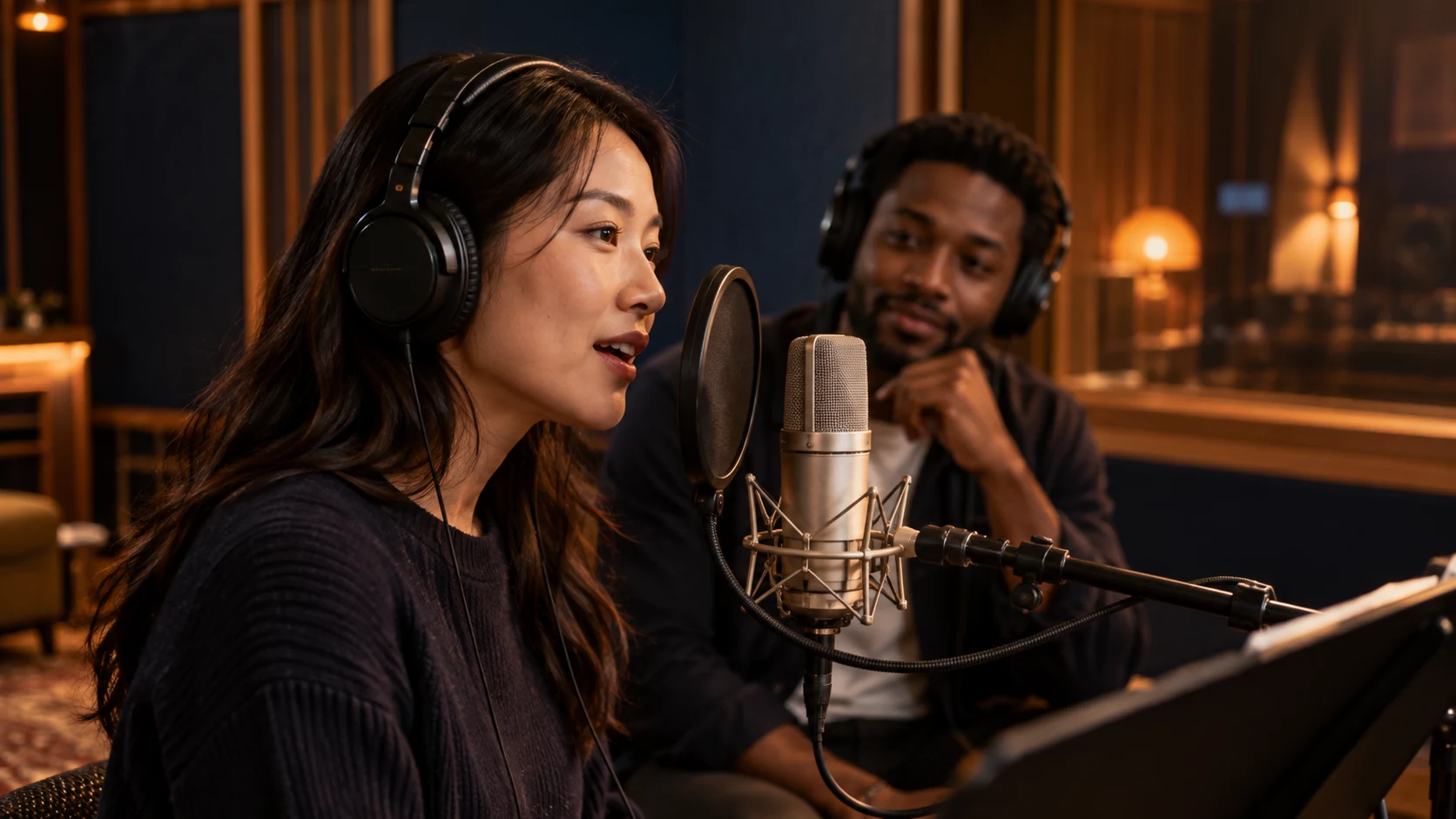
Answer text, voice and speaking style
Streaming speech
In-house speech synthesis and short-reference voice cloning, developed around natural conversation.
Our own TTS development supports service-specific voices. The company-reported 3–7 second reference voice-cloning capability requires rights and consent; output quality must be evaluated across reference conditions.
Normalize numbers, dates, abbreviations and borrowed words for speech. Shape sentence length and pauses, with pronunciation dictionaries and review sentences for important terminology.
Design sentence-level synthesis before the entire answer is complete. Separate inference, encoding, transport and playback to optimize response time and support interruption.
Validate codec and output levels for telephone bandwidth, kiosk speakers and mobile playback. Check voice consistency across channels.
External TTS can complement language or hosting requirements. Design a shared interface for voice selection, style controls, stream completion and errors.
The same data, conditions and measurement boundaries. A result starts with a reproducible protocol.
Evaluate naturalness MOS, speaker similarity, pronunciation errors and preference separately, with randomized blind listening, native listeners and confidence intervals.
Model latency and time to first audio are different measures. Record TTFB, real-time factor and playback readiness alongside codec, text length and concurrency.
Development goal. Measure internal model time on short inputs; disclose hardware. Excludes network, app and playback buffering.
Match region, language, codec, input length and concurrency. Also track a p95 goal of ≤500 ms.
Azure figure is guidance, not an Azure measured score. ≥100 sentences, 30 native listeners, randomized blind testing and confidence intervals.
Model inference latency ↓ · ElevenLabs Flash v2.5 ~75 ms¹
Client time to first audio byte · TTFB ↓ · Different from the 75 ms inference figure
Mean opinion score · MOS ↑ · Azure recommended threshold >4.0/5²
Explore emotional cues, then adapt the response and its delivery. EMOTION is about finding an appropriate way to speak, without claiming to know a person’s inner state.
Text and optional acoustic cues
Context-sensitive response and delivery
Interpreting emotional cues in voice, facial expressions and text.
Design for cues such as excitement, worry, frustration or calm. Acoustic analysis requires a separately integrated and validated model. An emotion estimate is neither a diagnosis nor a fact about the person.
Define response policies: calm guidance for worry, concise next steps for frustration and appropriate warmth for excitement. Useful, accurate guidance comes before emotional performance.
Control rate, pitch, pauses and intensity within the service design. Supported styles differ by engine and voice, so integration must distinguish external model features from our own development scope.
Tune expression and speaking pace around the sentences and situations used in a service. Design delivery around the purpose of each response, from guidance to reassurance and confirmation.
An administrator can connect an emotion-response API for analysis, replies and synthesized audio. Validate contextual appropriateness and end-to-end latency by language and speaker.
The same data, conditions and measurement boundaries. A result starts with a reproducible protocol.
Present the same text in multiple styles. Use blind listening to assess expression and appropriateness, recording class counts, rater counts, agreement and a confusion matrix.
Check pronunciation and speaker consistency across styles, and watch for excessive expression. Evaluate listener preference and task success. No measured public score is claimed here.
Connect speech to a digital persona that people can engage with on screen. Beyond appearance, the essentials are conversational timing and a useful service.

Response audio and a persona image
Synchronized avatar and service interface
Bringing voice and expression together in an approachable digital presence.
We develop photo-based avatars connected to speech, using images with appropriate rights. Design the persona, framing and interface together so people understand they are interacting with AI.
Synchronize speech, pauses and mouth movement, with clear listening, processing and speaking states. Evaluate visual stability and consistency between frames.
Design for viewing distance and input method across kiosks, web and exhibitions. Include a text-and-voice fallback when rendering is delayed.
Agree on brand, persona rights, resolution and network conditions before choosing production and delivery methods. Identify concept imagery where no deployment photograph exists.
Connect STT, RAG and TTS events to interface states. When a user starts speaking again, coordinate playback interruption and response updates.
The same data, conditions and measurement boundaries. A result starts with a reproducible protocol.
Evaluate audiovisual offset, face and background consistency, and dropped frames separately, alongside human viewing tests. No quantified head-to-head result is claimed.
Measure first rendering time and audiovisual synchronization. Fix resolution, frame rate, network conditions and concurrent sessions for reproducible evaluation.